Property sales · IHK-certified · Since 2002Heidelberg · Baden-Württemberg

Sell your property in Heidelberg

Eight very different districts, eight very different buyer groups: from the UNESCO Altstadt to the Neuenheimer Feld university campus. We price by district and market with precision.

4,9· 88 Google reviews
ImmoScout24 Gold Partner
Quick answerHeidelberg

Heidelberg is the Rhine-Neckar region's most expensive market: condos average €5,416/m² (Q1 2026, +5.2 % YoY), houses €5,387/m² (+3.8 %). The price gap between Altstadt/Neuenheim and Kirchheim/Ziegelhausen is larger than in any neighbouring city – one-size-fits-all estimates fail here.

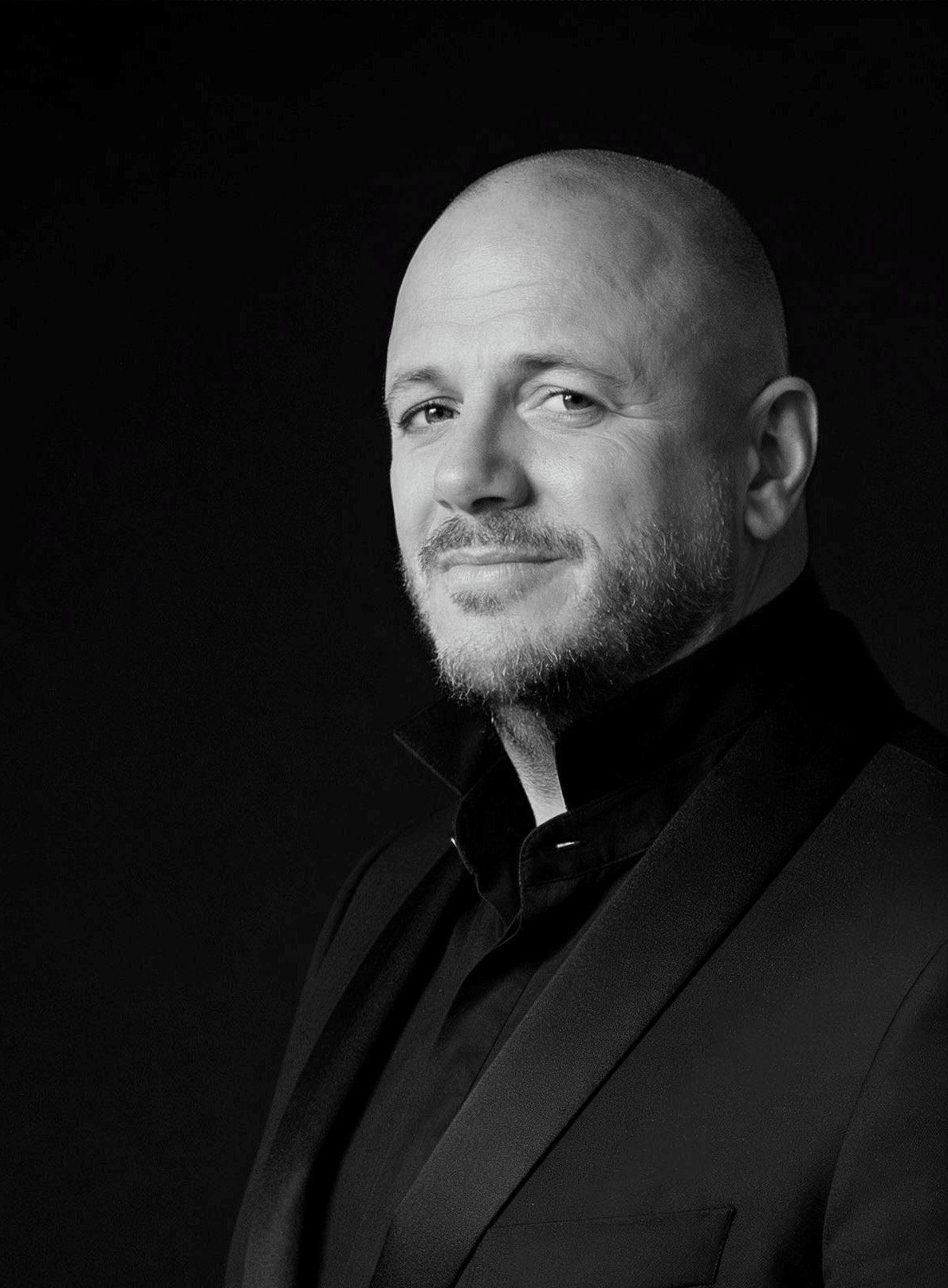
Tobias Rösch – Founder & Managing Director – Real Estate Agent and Financing Expert
Written by

Tobias Rösch

Founder & Managing Director – Real Estate Agent and Financing Expert

Tobias Rösch founded Mia Immobilien after more than ten years at Deutsche Bank, focused on mortgage financing and asset structures. He combines his qualifications as an insurance professional, certified mortgage broker and real estate agent into a single advisory practice covering sales, financing and wealth structure – in the Rhine-Neckar region since 2002.

Certified Real Estate Agent (IHK)Certified Mortgage Broker (§ 34i GewO)Insurance Professional10+ years Deutsche BankFounder of Mia Immobilien mit Herz GmbH

Recognized & Awarded by

Baufi Partner
ImmoScout24 Gold Partner
Google 5-Star Customer Reviews
ProvenExpert Top Recommendation 2026
IHK
Immowelt Premium Partner
Proven Expert
Market analysis Heidelberg

The Heidelberg real estate market in 2026

1Price level: the region's most expensive market

At €5,416/m² for condos and €5,387/m² for single-family homes (Q1 2026), Heidelberg is by far the Rhine-Neckar region's most expensive market. For comparison: Mannheim €4,019/m² (–26 %), Schwetzingen €3,525/m² (–35 %), Ludwigshafen €2,928/m² (–46 %). The premium isn't about fittings or substance but structural: limited land between Neckar, Heiligenberg and Königstuhl; the region's highest job density in science and medicine per capita; persistent international demand. These factors act simultaneously – short-term market moves barely shift them.

2Price development 2025/2026 – clearly positive

In 2025/2026, Heidelberg is among the few West German A-locations with clearly positive momentum: +5.2 % YoY for condos, +3.8 % for houses on aggregated Q1 2026 data. That beats the national Destatis reading of +3.0 % for Q4/2025. Interpretation: after the 2022–2024 rate correction, both international buyer groups and well-funded domestic returnees (Frankfurt, Munich, Zurich, London) are back. For sellers: listing a well-kept object in Neuenheim, Weststadt or Altstadt in Q1/Q2 2026 means selling into a recovered price level, not a correction.

3Patrick-Henry-Village – the game changer

The Patrick-Henry-Village (PHV) conversion in Kirchheim is the largest urban-development project in Heidelberg's postwar history. Up to 10,000 new residents are planned on ~97 hectares. It shifts two things: first, the price map in Kirchheim and Rohrbach – existing stock is now benchmarked against KfW-40 new-builds, pressuring unrenovated 1960s/70s condos. Second, buyer demographics – Kirchheim is moving from a price-sensitive family district toward an address for tech and biotech households. For sellers in the established core (Altstadt, Neuenheim, Weststadt, Handschuhsheim), PHV stays price-neutral to slightly positive because it doesn't resolve core-location scarcity.

4Financing environment and international buyers

After the 2022/23 rate shock, the 2025/2026 financing environment has normalised. More important than the absolute rate for Heidelberg sellers is the international dimension: around a third of Heidelberg prospects operate with internationally shaped financing setups – US-dollar income, UK credit history, corporate scholarships, Swiss bank relationships. German banks evaluate these profiles with varying strictness. We work with a defined partner set (500+ bank network) handling non-resident financing routinely. For international buyers, speed of financing approval is the second most important factor after price.

5Rent level and investor perspective

Heidelberg has the highest rent level in the Rhine-Neckar region at ~€14.50/m² cold (Q1 2026). At the same time rent control under Baden-Württemberg state regulation dampens yield dynamics for investor-buyers. For sellers of investor objects this means the naive "rent × area" math produces mis-pricings. We work from the cap limits under § 556d BGB, factor the actual rent-index reference and project new-letting rent development over a typical seven- to ten-year investor hold. The result is a defensible yield figure the buyer can adopt rather than recompute.

6What our recent Heidelberg closings show

Three clear patterns emerge from our ongoing Heidelberg placements in 2025–2026. First: Neuenheim and Weststadt have the fastest marketing times – well-kept Gründerzeit Altbauten with complete paperwork close in four to eight weeks. Second: Altstadt heritage Altbauten achieve premium prices with well-funded tax-motivated buyers when the § 7i EStG depreciation mechanics are cleanly presented. Third: existing-stock objects in Kirchheim without an energy strategy lose on average 8–12 % from the opening price against PHV new-builds in negotiation. Our approach follows these patterns – no template, precise per-type-and-location positioning.

Buyer profiles

Who buys in Heidelberg?

Our marketing strategy follows the specific buyer profile per property. These profiles come from our own on-the-ground placements.

Profile #1

Newly appointed professors and UKHD chief physicians

W2/W3 appointments at Ruprecht-Karls-University and chief-physician posts at UKHD bring dozens of highly qualified buyers into the market each year. Budget typically €900k to €1.8m, higher for full chairs. Target objects: Altbau floor apartments in Weststadt, Jugendstil villas in Neuenheim with Schloss views, or well-kept single-family houses in Handschuhsheim with a garden against the Heiligenberg. Decision criteria: quiet location (for publications and home office), bright layout with 2.80 m+ ceiling height, two bathrooms, parking. This group expects a complete document pack (energy certificate, renovation records, service-cost history) at the first viewing and rarely decides after more than two viewings. They don't do long negotiation loops.

Profile #2

International researchers from EMBL, DKFZ and the Max Planck institutes

EMBL, the German Cancer Research Center, Max Planck institutes and the BioRN cluster bring scientists from the US, UK, India, China, Brazil and across Europe to Heidelberg. Two sub-segments: young postdocs (28–38) with budgets €350k–€600k for 2- to 3-room apartments in Bergheim, Weststadt and the Neuenheimer Feld periphery – and group leaders with families (38–55) at €800k–€1.4m for houses in Handschuhsheim or Ziegelhausen. Prerequisites: an English exposé with scaled floor plans (not merely translated, but internationally legible), banking partners for non-resident financing, and a notary who handles sworn-interpreter or direct-English deeds. Without this infrastructure, these buyers go to competing listings.

Profile #3

Investors in student housing

With ~30,000 students at Heidelberg University, SRH Hochschule, Pädagogische Hochschule and other institutions, the city has permanent demand for student-grade housing. Buyer profile: private investors from the Rhine-Neckar region and southern Germany, budget €250k–€500k. Targets: micro-apartments from 22 m² in the Altstadt (high willingness to pay from first-semesters and visiting scientists), 3-room shared-flat-ready units in Bergheim and Weststadt with individual-room layouts, and small multi-family houses in Rohrbach and Kirchheim. The selling argument is always rentability per room, not the whole unit – so we prepare a separate yield exposé for this group: gross and net rental yield, vacancy assumptions, maintenance reserve, rent-index benchmark.

Profile #4

Families pulled in by PHV (Kirchheim and Rohrbach)

Patrick-Henry-Village – the conversion of the former US military settlement in Kirchheim – will add up to 10,000 new residents over the coming years. That structurally changes buyer demographics in Kirchheim and Rohrbach: instead of price-sensitive first-time families, more tech, biotech and SAP-oriented dual-income households arrive with KfW-40 new-builds as their reference. Typical budget €700k–€1.1m. Existing-stock sellers must measure up: energy values below 80 kWh/(m²·a) are expected; retrofit plans with concrete cost estimates are compared directly. Without a solid energy strategy, sellers lose on price or time on market.

Profile #5

Returning buyers from Frankfurt, Munich, Zurich and London

A growing segment: former Heidelberg residents returning after careers in Frankfurt banking, Munich tech and pharma, Zurich private banking or the City of London – often aged 45–60 with high equity and a clear preference for premium locations. Budgets €1.2m–€3.5m, occasionally higher. Targets: detached villas in Neuenheim and Handschuhsheim, town houses in Weststadt, selected Altstadt heritage Altbauten with Neckar views. For this group, off-market placement often matters more than maximum reach: discreet outreach via an agent with a real network, not public listings. In the last 18 months we have placed several Heidelberg premium objects to returning buyers without any public listing.

District tips

What applies per district in Heidelberg?

City averages don't help any seller. Every micro-location brings its own buyers, prices and document requirements.

Altstadt

The Heidelberg Altstadt isn't an ordinary district but a closed ensemble between Bismarckplatz, Karlstor and the Neckar. Ensemble protection along Hauptstraße, Große Mantelgasse and Marstallstraße is the dominant factor: every façade change, every window replacement, every rooftop addition must be cleared with the municipal heritage authority. For sellers this cuts both ways: restrictive on buyer build plans, but value-stabilising through capped mass. Prices sit clearly above the Heidelberg average – apartments on mid Hauptstraße regularly between €6,500 and €8,500/m², in exceptional cases higher. We document what is already approved in the exposé and the § 7i EStG depreciation open to the buyer – neutralising heritage-protection anxiety.

Neuenheim

Neuenheim north of the Neckar is Heidelberg's prime address: Jugendstil and Gründerzeit villas along Brückenstraße and Ladenburger Straße with views of the palace and Altstadt. The district combines the Neuenheimer Feld university campus, upmarket retail around the bridgehead and top-tier schools. Top-end villas with palace views reach €9,000–€12,000/m² in our recent transactions; normal Gründerzeit floor apartments €6,000–€7,500/m². Buyers are affluent and demanding – they expect a complete building file: 20 years of renovation records, current energy values, heating age, insulation figures, noise documentation. A gappy exposé is punished faster with price cuts in Neuenheim than in any other Heidelberg district.

Handschuhsheim

Handschuhsheim – locally "Hendesse" – has kept its village feel around the Tiefburg and Dossenheimer Landstraße while being one of Heidelberg's priciest family districts. The combination of historic centre, wine festivals, distinct identity and direct hillside position against the Heiligenberg attracts academic dual-income families. Key sales factor: build-ability on slopes. Many plots along Philosophenweg and the Heiligenberg are topographically complex; extension or new-build potential is often restricted. Before listing we pull the current zoning extract from the city of Heidelberg, slope data from the LGL geoportal and – where they exist – prior planning enquiries. That de-risks the buyer and shortens negotiation.

Bergheim

Bergheim between the main station and Kurfürsten-Anlage is Heidelberg's student and young-professional hub. The district has developed sharply over the last 15 years: new office buildings for the Print Media Academy, the HQ of Heidelberg Materials and a dense gastronomy scene. For investor-condo sellers this is ideal: rental demand is year-round high, vacancy typically under six weeks. 2026 per-m² averages for 2- and 3-room units sit €4,800–€6,000. Decisive for the sale: a yield exposé with current rent-index benchmarking, vacancy history and service-cost breakdown. Classic residential exposés with lifestyle photography work worse here – the buyers are investors, not users.

Weststadt

Weststadt around Wilhelmsplatz and Kurfürsten-Anlage is one of Heidelberg's liveliest districts – Gründerzeit Altbauten with stucco ceilings, parquet, and double doors. Buyer profile: academic couples, lawyers, consultants, often around 40, budget €700k–€1.2m. Two things are decisive: first, documenting original details – stucco, parquet, double doors, historic bathroom tiles are value drivers that must appear with high-end detail photography in late-afternoon light. Second, honest disclosure of energy substance: Weststadt Altbau often carries high heating costs if insulation and windows haven't been modernised. Combining the energy certificate with a retrofit roadmap avoids price cuts.

Rohrbach

Rohrbach in the south is the affordable alternative for Heidelberg families who don't want to leave the city. Price level ~30 % below Neuenheim with working infrastructure: own retail at Rohrbach Markt, tram to Bismarckplatz and station, good primary schools. The strongest argument for sellers is the total-cost math: property tax, heating energy, WEG service costs and travel costs in Rohrbach sit clearly below the Altstadt without quality of life dropping proportionally. In the exposé we model a concrete annual running-cost comparison against similar Altstadt or Neuenheim objects – making the Rohrbach advantage tangible rather than asserted. Works especially well for semi-detached and terrace houses in quiet streets like Albert-Fritz-Straße.

Kirchheim

Kirchheim is being transformed by the Patrick-Henry-Village (PHV) conversion from a budget-friendly edge district into a development zone with regional attention. Selling an existing property here means knowing and positioning the PHV master plan: how advanced is the specific phase? Which infrastructure (school, retail, transit) exists now or comes within two years? What quality are the new-builds arising next door? For existing-stock sellers this is two-sided: PHV upgrades Kirchheim structurally, but depresses prices of unrenovated 1960s/70s apartments benchmarked directly against KfW-40 new-builds. We position existing objects with a clear energy strategy (recent renovation, retrofit plan) and flag the district's development outlook actively in the exposé.

Ziegelhausen

Ziegelhausen sits east of the Altstadt in the Neckar valley – quiet slopes and valley streets, forest proximity, settled neighbourhoods. Classic active-retiree profile: couples aged 55+ combining Heidelberg proximity with nature, or families deliberately avoiding city noise. Critical buying criteria that must appear precisely in the exposé: actual connectivity (bus frequency of lines 34 and 39, drive time to Altstadt morning and evening), winter service on winding roads, parking at the plot, and mobile/fibre coverage (home-office relevant). Neckar-view objects earn a premium; side-valley objects without a view must convince via layout and plot size instead.

Sales strategy

How we market your property in Heidelberg

No template marketing. Every address gets its own combination of pricing, channel mix, timing and paperwork pack.

Pricing

Heidelberg's price spread is by far the largest among the 24 MIA cities – factor 2.5 between cheapest and most expensive locations. The city average of €5,416/m² is largely useless for specific pricing. We work per address with a dedicated comparables set from the Heidelberg market report, cross-checked against our own transactions of the last 18 months. The opening price is deliberately placed in the upper third of the realistic corridor – high enough to signal quality to well-funded targets, low enough not to be dismissed. International buyer groups tend to accept higher entry prices than regional ones, provided documents and presentation convince.

Marketing channels

Heidelberg's channel mix is broader than in any other MIA city. Standard mix: ImmoScout24 Premium (wide reach for national and international buyers), the Engel & Völkers network for objects €900k+, Immowelt for regional coverage. On top: LinkedIn-powered outreach into the international professor and researcher network, direct approach via EMBL and DKFZ HR departments for relocation homes, and our internal buyer database of 2,200+ pre-qualified prospects. For premium objects above €1.5m we work off-market: discreet approach, no public listings. Several Heidelberg villas have been placed that way over the past 18 months without any portal listing.

Timing

Heidelberg sale timing follows two parallel rhythms. For investor objects in Bergheim, Weststadt and Altstadt: March to early May (pre-summer semester) and September to mid-October (pre-winter semester) are the strongest windows, because rental demand rises visibly and the yield argument gets concrete. For owner-occupier objects (professor apartments, family homes): January to March (school applications) and August to October (pre-school-year) are best. International buyers follow slightly different rules – relocations to Heidelberg cluster around academic-year starts (March/September), which reinforces the investor windows. November to mid-January is the weakest phase, except for inheritance cases.

Paperwork

For Heidelberg properties we add four documents to the standard package that are regularly required here: first, the current entry from the Baden-Württemberg heritage register for Altstadt, Weststadt and Neuenheim objects. Second, a noise assessment for objects along federal roads (B37, B3) and near the main station. Third, the zoning extract with a clear use designation – especially critical for planned short-term rental. Fourth, the English exposé in internationally legible form. Without this package before listing, Heidelberg marketing time averages two to four weeks longer – and the seller's negotiating position is weaker.

Typical sale scenarios

Three real scenarios from Heidelberg

Not marketing – situations from our ongoing placement practice, anonymised but with the actual figures and decisions.

Scenario 1: Listed Altbau in Weststadt, 138 m², sold to a US professor

Situation

Two siblings inherit a Gründerzeit apartment in Weststadt (Kurfürsten-Anlage, built 1902, individually listed), 138 m², four rooms, stucco, parquet, two courtyard balconies. No renovation since 1995, heating old (oil, 28 years), bathrooms from the 1990s. Both heirs live in Berlin and Hamburg, no owner-use plans.

Approach

We deliberately advise against full renovation and for targeted upgrades: replace the oil heating with a modern gas or heat-pump system, modernise one bathroom, professionally refurbish stucco and parquet, present the courtyard view in high-end photography at dusk. Bilingual German–English exposé with a detailed § 7i EStG depreciation presentation for the buyer. Targeted positioning to international professors via our EMBL/DKFZ network.

Outcome

Opening price €975,000 (€7,065/m²). Nine qualified viewings in the first three weeks, including four international prospects. Notarised after seven weeks at €960,000 to a newly appointed US professor at UKHD who will write down renovation costs for tax. The international buyer accepted without renegotiation because the English exposé and complete documentation made the value creation case transparent.

Scenario 2: Investor condo in Bergheim, 58 m², student let

Situation

Private investor (62, from Mannheim) sells a 58 m² 3-room condo in Bergheim (built 1981, Rohrbacher Straße), shared-flat-ready with three equal-sized rooms. Let to rotating student flats since 2015, current cold rent €1,010 (€17.41/m²), clearly above city average. Two tenants in place, contract runs to 2027 with annual extension.

Approach

Clear investor positioning. Two exposés: one with residential focus (for parents buying for student children), one yield-focused (rent-index comparison, gross and net yield, vacancy history, WEG maintenance reserve). Marketing via ImmoScout24 Premium plus our internal investor network; no owner-user targeting. Timing: early September pre-winter-semester.

Outcome

Opening price €375,000 (€6,466/m²). Five qualified investor enquiries in the first two weeks, three parent enquiries in parallel. Notary after five weeks at €368,000 to a Heidelberg investor couple already owning three comparable objects, seamlessly taking over the current tenancies. No post-bank-review renegotiation because the yield math was fully transparent in the exposé.

Scenario 3: Single-family house in Kirchheim, PHV neighbourhood, renovation backlog

Situation

A family sells their mid-terrace house in Kirchheim (built 1974, 128 m² living area, 210 m² plot), relocating to southern Germany. The property sits 400 m from the first PHV construction phase. Roof from 1998, windows partly renewed 2008, gas heating 2012, bathroom unrenovated since installation. Energy class E (142 kWh/(m²·a)).

Approach

Challenging because directly benchmarked against KfW-40 PHV new-builds. We recommend not full renovation but a transparent modernisation package for the buyer: detailed retrofit roadmap with three cost variants (€250k full, €120k core, €60k priority), current energy certificate with post-retrofit projection (class B achievable), zoning extract documenting densification potential. Positioning: "Location at PHV quarter with modernisation headroom" rather than "needs renovation".

Outcome

Opening price €695,000. Eight viewings over four weeks, mostly young families open to renovation. Notarised after ten weeks at €679,000 to a tech family who adopts the priority retrofit plan and will use KfW subsidies for further renovation. PHV proximity became a plus rather than a value-comparison problem because the exposé actively communicated the district's development horizon.

Sale specifics

What requires extra care when selling in Heidelberg

Hillside and Altbau valuation under ImmoWertV

Three valuation issues are Heidelberg-specific and systematically mishandled by online tools: first, the slope premium – plots on the Heiligenberg, Königstuhl and Philosophenweg have particularities because the usable area diverges from the nominal. Second, heritage binding in Altstadt, Weststadt and Neuenheim, which can add or subtract value (deduction for renovation constraints, addition for § 7i EStG depreciation). Third, substance risks in Gründerzeit Altbauten: dry rot, lead pipes, asbestos in cellars until ~1993. We value using comparables from the municipal market report – not portal averages.

International buyers – two languages, two legal systems

Heidelberg is the most international real-estate market in the Rhine-Neckar region. About a third of Heidelberg prospects communicate primarily in English – university staff from the US, UK, India, East Asia, EMBL and DKFZ researchers, international executives. Three prerequisites follow: a truly internationally legible English exposé (not Google-Translate), banking partners for non-resident financing (not every German bank offers it), and notaries who routinely handle English-language deeds or sworn-interpreter arrangements. We maintain this infrastructure – without it, well-qualified prospects go to better-equipped competitors.

Rent control and its effect on investor prices

Heidelberg is designated a tight housing market under Baden-Württemberg state regulation. New tenancies are capped by the rent index plus permitted surcharges (§ 556d BGB); cap rules apply. For buy-to-let buyers this directly shapes yield calculations – the maximum new cold rent is bounded not by the market but by law. Sellers of investor objects must prepare this math and present it cleanly: current rent-index reference, cap limit, expected new cold rent. Without this, the buyer runs the math alone – and becomes a discount negotiator.

World Heritage discussion and ensemble protection

Heidelberg is formally not UNESCO World Heritage – the bid was withdrawn in 2007. Still, the city's ensemble protection functions effectively like heritage status: the local heritage authority rigorously reviews façade changes, rooftop additions and window replacements along the main axes. For sellers this is a plus, not a minus: the location stays value-stable because nothing can be built against it, and well-funded international buyers appreciate the protection. The right handling: clear documentation of the heritage and ensemble status of the specific object, plus a presentation of depreciation options for renovation-minded buyers.

City specifics

What runs differently in Heidelberg

Seasonality

Heidelberg's seasonality is more complex than any other MIA city because three rhythms overlap: the university semester cycle (March/September), the family school cycle (January–March and August–October) and the international relocation cycle (January–June for autumn moves, July–October for January moves). Investor objects in Bergheim, Weststadt and Altstadt follow the semester rhythm; owner-occupier objects in Neuenheim, Handschuhsheim and Ziegelhausen the family cycles. Weakest phase: November to mid-January. Tourism (Christmas market late November/December, summer season from April) barely affects sales, but amplifies the emotional impact of Altstadt and palace-adjacent viewings.

Local paperwork specifics

Heidelberg requires four additional document modules beyond the standard package, from our practice: first, the Baden-Württemberg heritage registry entry for Altstadt, Weststadt and Neuenheim objects. Second, clarification of ensemble status (individually listed vs. ensemble) with the local heritage authority. Third, for hillside plots (Handschuhsheim, Ziegelhausen, Rohrbach), current slope data from the LGL geoportal and, if relevant, a structural note. Fourth, the English exposé in internationally legible form. Having these four ready before listing cuts average Heidelberg sale duration by three to five weeks.

Local taxes & costs

Heidelberg is in Baden-Württemberg, real-estate transfer tax 5.0 % (paid by buyer). Three Heidelberg specifics matter most for sellers: first, § 7i EStG depreciation for listed Altbauten – often value-driving in Altstadt, Weststadt and Neuenheim because buyers can write down renovation costs. Second, rent control as a component of investor yield math. Third, the § 23 EStG speculation period: Heidelberg properties in high turnover benefit from clearly documented holding periods. Municipal property-tax multipliers sit at Heidelberg's regional average – neither noticeably high nor low. Individual tax advice from a specialist lawyer or tax advisor is mandatory.

Client Testimonials

What our clients say about us

Real reviews from real clients – see for yourself the quality of our work.

Google
0
0 Reviews
Lisa Giardina

Lisa Giardina

02/2026

We had the viewing with Mr. Sela and the financing appointment with Mr. Rösch – and can only warmly recommend both. Everything went super relaxed yet absolutely professional.

Oudi Hamada

Oudi Hamada

09/2025

The apartment purchase went absolutely smoothly and professionally. From the first viewing to the key handover, I was always accompanied reliably, friendly and competently.

Said B.

Said B.

09/2025

Thanks to the great support from Tobias, we were able to make our dream of owning a house come true. From viewing to financing, it's worth even more than a 5-star review.

Daniela Pignata

Daniela Pignata

09/2025

From the beginning, through marketing to the sale of a property, I was very well looked after. The advice was absolutely right. The handling with MiaMakler relieved me immensely.

C S

C S

04/2025

What a wonderful time it was with you! It's truly rare to encounter not only competence in such a process, but also so much warmth, humor and genuine togetherness.

Michael Näther

Michael Näther

01/2025

The sale of our property was completed in the shortest possible time. The entire team is sensationally good, always reachable, even on weekends. 6 stars!

FAQ – selling in Heidelberg

Frequently asked questions

Three structural reasons: first, topography – between the Neckar, Heiligenberg and Königstuhl there is barely any new buildable land; even the Patrick-Henry-Village conversion only adds limited housing to the tight core. Second, employer density on a small footprint: a university with 30,000 students, UKHD as one of Germany's largest university hospitals, DKFZ, EMBL, Max Planck institutes, Heidelberg Materials. Third, international demand with no comparable level in any neighbouring city. The sum yields city-average €5,416/m² (Q1 2026) – about 35 % above Schwetzingen and 85 % above Ludwigshafen. That's not overhang but structural scarcity.

Jurisdiction & legal basis

Official bodies for Heidelberg

Appraisal committee

Municipal Appraisal Committee Heidelberg

Publishes land reference values and the real-estate market report used for valuations and tax topics (inheritance, gift).

Tax & legal basis

Real estate transfer tax Baden-Württemberg: 5,0 %

Paid by the buyer. Relevant German laws for the sale: § 656c BGB, § 23 EStG (speculation tax), § 80 GEG (energy certificate).

Selling in Heidelberg? Book your free consultation.

Personal advice from Tobias Rösch and his team. Free property valuation based on current comparables from the Rhine-Neckar region.

We look forward to your message

Contact us now